


Side Effects of Gabapentin: What to Know Before Use
When you are struggling with the relentless, burning sensation of nerve pain, finding a solution becomes your top priority. For many patients in Dubai and around the world, gabapentin (brand name Neurontin) is the primary tool used to quiet those misfiring nerves. However, as with any potent neurological medication, understanding the side effects of gabapentin is essential for a safe and successful recovery.
Whether you are using it for a pinched nerve, chronic back issues, or post-surgical recovery, knowing what to expect can help you navigate the “adjustment period” without unnecessary anxiety. This comprehensive guide explores the side effects from gabapentin, common safety concerns, and the vital role of specialist oversight in managing your treatment journey.
Is Gabapentin an NSAID? Understanding the Medication Class
One of the most frequent questions patients ask their pharmacist is: is gabapentin an nsaid? It is a common point of confusion because both are used to treat back pain and sciatica. However, the answer is no.
Gabapentin nsaid comparisons are common because people often think of all painkillers in the same category. Non-Steroidal Anti-Inflammatory Drugs (NSAIDs), such as Ibuprofen, Aspirin, or Naproxen, work by blocking enzymes that cause physical inflammation and swelling at the site of an injury. Gabapentin, on the other hand, is an anticonvulsant. It works on the central nervous system (CNS) to stabilize electrical activity in the brain and spinal cord.
Essentially, while an NSAID treats the “fire” of inflammation, gabapentin turns down the “volume” of the nerve signals themselves. Understanding that is gabapentin an nsaid is false helps patients realize why their doctor might prescribe both simultaneously for a multifaceted condition like a herniated disc. They target two different sources of pain.
Is Gabapentin a Narcotic or Controlled Substance?
In the current medical landscape, patients are rightfully cautious about the medications they take. You may find yourself asking: is gabapentin a narcotic?
Technically, is gabapentin a narcotic? No. It is not an opioid. However, its status is evolving. In many regions, the answer to “is gabapentin a controlled substance” is now a “yes.” Because it can enhance the effects of other substances, it is regulated to prevent misuse. In Dubai and the wider UAE, it is a strictly controlled prescription medication, meaning you cannot obtain it without a licensed physician’s oversight and a registered prescription.
Common Side Effects from Gabapentin
Most side effects from gabapentin occur during the first few weeks of treatment. This is known as the titration phase, where your body is slowly adapting to the neurological shifts the medication induces in your brain’s neurotransmitters.
Does Gabapentin Make You Sleepy?
One of the primary complaints is drowsiness. So, does gabapentin make you sleepy? Yes, it is the most common side effect reported by patients. Because the drug slows down nerve signaling, it also has a mild sedative effect on the brain.
Management Tip: Most doctors recommend taking your largest dose at night to minimize daytime grogginess. As your body adjusts over 10–14 days, the “brain fog” usually begins to lift.

Does Gabapentin Cause Weight Gain?
Another frequent concern is metabolic change. Does gabapentin cause weight gain? For some patients, it can. This is often due to a combination of increased appetite and peripheral edema (fluid retention in the limbs). While not every patient experiences this, monitoring your diet and light activity levels during treatment is recommended. It is not a “fat-burning” blocker, but rather a shift in how your body manages hunger signals and fluid.
Does Gabapentin Cause Memory Loss?
Patients sometimes report feeling “spaced out” or having difficulty finding words. Does gabapentin cause memory loss? While it doesn’t typically cause permanent damage, it can cause transient cognitive slowing. This is often described as “gabapentin fog” and is usually dose-dependent, meaning it improves if the dose is lowered or once the body adapts to the chemical changes.
Evaluating Long-Term Risks: Is Gabapentin Addictive?
The question of is gabapentin addictive is nuanced. While it does not produce the same intense “high” as traditional narcotics, the body does become physically dependent on it over time. This is why gabapentin withdrawal symptoms are a significant concern if the medication is stopped suddenly.
If you decide to stop the medication, you must work with a specialist to taper the dose slowly. Gabapentin withdrawal symptoms can include:
Severe anxiety and agitation.
Insomnia and night sweats.
Nausea and flu-like symptoms.
In extreme cases, seizures (even if you do not have epilepsy).
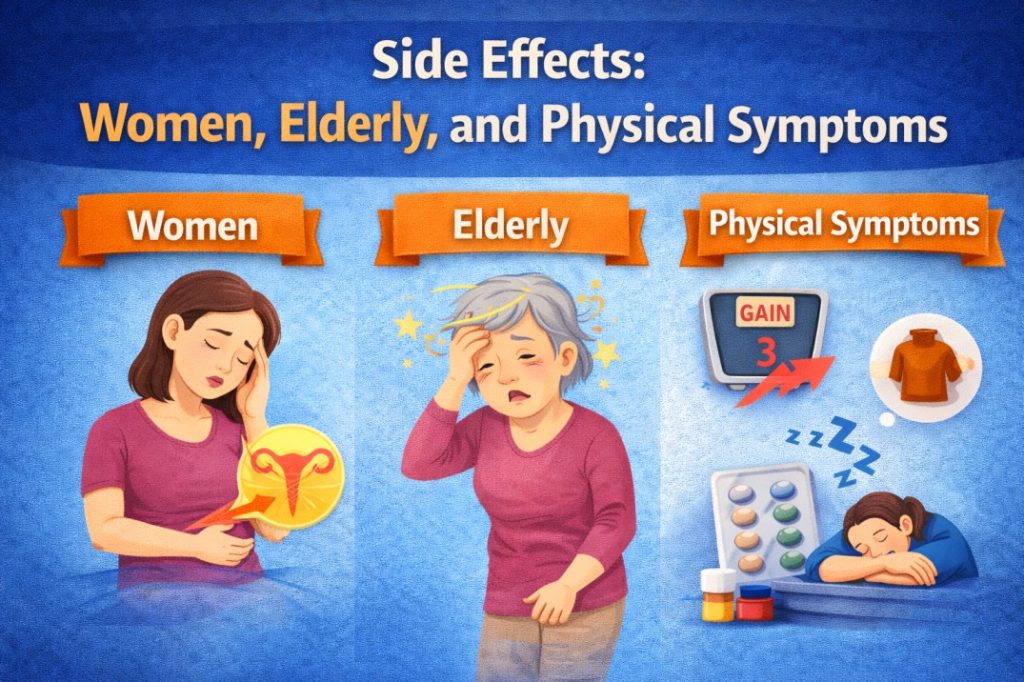
Specific Side Effects: Women, Elderly, and Physical Symptoms
The way a body reacts to gabapentin for sciatica side effects can change based on demographics and underlying health conditions.
Gabapentin Side Effects in Women
Research into gabapentin side effects in women suggests that some may experience peripheral swelling (edema) more frequently than men. Additionally, while rare, some women report changes in their menstrual cycle or increased breast tenderness. Pregnant or breastfeeding women should use the medication with extreme caution and only under strict specialist guidance, as the drug can cross the placental barrier.
Gabapentin Side Effects in the Elderly
Safety is paramount for older adults. Gabapentin side effects in elderly patients often involve a higher risk of ataxia (lack of coordination) and dizziness. This significantly increases the risk of falls and fractures. For this reason, elderly patients are usually started on the “lowest possible dose” and monitored closely for any signs of confusion or extreme lethargy that could be mistaken for dementia.
Gabapentin Side Effects Tremors
While gabapentin is sometimes used to treat certain types of tremors, some patients report gabapentin side effects tremors as a paradoxical reaction. This usually manifests as a fine shaking in the hands. If you notice new or worsening shaking after starting the medication, it is a sign that your dosage may need adjustment or that your body is overly sensitive to the drug’s impact on the cerebellum.
Gabapentin Weakness in Legs
A specific side effect reported by those with spine issues is gabapentin weakness in legs. This “wobbly” feeling is often related to the drug’s effect on the part of the brain that controls balance. It is important to distinguish this from actual nerve-related weakness (like foot drop), which requires immediate medical attention. If you feel like your legs are “giving way,” contact a specialist immediately.
Medication Safety: Combinations and Alcohol
To minimize the side effects of gabapentin, you must be aware of how it interacts with other substances in your cabinet.
Can I Take Gabapentin with Paracetamol?
Fortunately, can i take gabapentin with paracetamol is usually a “yes.” Paracetamol (Tylenol) works on different pain pathways and does not increase the sedative effects of gabapentin. This combination is frequently used in a “multimodal” pain management strategy to provide more comprehensive relief than one drug alone.
Gabapentin and Tylenol PM
Unlike standard paracetamol, gabapentin and tylenol pm is a risky combination. Tylenol PM contains diphenhydramine (an antihistamine that causes sleepiness). Combining this with gabapentin can lead to extreme sedation and respiratory depression. Always check the labels of over-the-counter sleep aids before mixing them with your prescription.
Gabapentin and Alcohol
Mixing gabapentin and alcohol is highly dangerous. Alcohol significantly amplifies the side effects from gabapentin, leading to severe dizziness, loss of motor control, and potentially dangerous levels of drowsiness. It is best to avoid alcohol entirely while on this medication to prevent accidental falls or respiratory distress.
How Long Should I Take Gabapentin for Nerve Pain?
A common question for long-term sufferers is: how long should i take gabapentin for nerve pain? There is no one-size-fits-all answer. For some with acute sciatica caused by a minor disc bulge, the course may be 8–12 weeks. For chronic conditions like spinal stenosis, it may be longer.
However, the longer you take it, the more careful you must be regarding the exit strategy. Whether you’ve been on it for a month or a year, the “how” of stopping is just as important as the “how” of starting.
When to See a Specialist: Moving Beyond Medication
While gabapentin for sciatica side effects are often manageable, the medication is essentially a “volume knob” for your pain. It does not fix the herniated disc or the bone spur that is causing the problem.
If you find that your side effects of gabapentin are becoming too much to handle—interfering with your work, your mood, or your safety—it is time to consult an expert. At King’s Spine Centre Dubai, the goal is to provide a comprehensive diagnosis that moves you toward a permanent solution rather than a lifetime of pills.
Specialist Care at King’s Spine Centre Dubai
When medication is not enough, or when the side effects from gabapentin outweigh the benefits, the team at King’s Spine Centre Dubai offers advanced interventions:
Precision Diagnosis: Using high-resolution imaging and nerve conduction studies to identify the exact source of nerve compression.
Guided Injections: Delivering anti-inflammatory medication (epidural steroid injections) directly to the nerve root, often reducing or eliminating the need for high-dose oral gabapentin.
Tapering Support: Helping you safely manage gabapentin withdrawal symptoms while transitioning to more effective, non-systemic therapies.
Minimally Invasive Solutions: For conditions like spinal stenosis or large herniated discs, a small procedure might provide the permanent decompression your nerves need.
A specialist can help determine if your gabapentin weakness in legs is a drug side effect or a sign that your spine condition is worsening and requires immediate mechanical intervention.
Warning Signs: When to Seek Urgent Help
While most side effects from gabapentin are mild, there are rare, serious reactions that require immediate medical attention:
Suicidal Thoughts: Any sudden onset of depression, anxiety, or thoughts of self-harm.
Severe Rash: Blistering or peeling skin, which could indicate a rare allergic reaction.
Anaphylaxis: Swelling of the lips, tongue, or difficulty breathing.
Severe Tremors: If gabapentin side effects tremors become so severe they prevent you from eating or drinking.
Summary and Next Steps
The side effects of gabapentin shouldn’t necessarily scare you away from a medication that could provide significant relief, but they should be respected. By understanding that is gabapentin an nsaid is a myth, knowing the risks of gabapentin and alcohol, and recognizing the signs of gabapentin withdrawal symptoms, you are empowered to manage your health safely.
Medication is a tool, but it is not the only one. If you are currently struggling with gabapentin for sciatica side effects or feel that your nerve pain is winning the battle despite your prescription, don’t just wait it out. Reach out to a trusted provider like King’s Spine Centre Dubai to explore a more targeted, specialist-led approach to your spine health.
Here are a list of questions about side effects and tapering to bring to your next appointment at King’s Spine Centre?
Phase 1: Evaluating Your Current Side Effects
Before your appointment, use this checklist to track your symptoms. Bring this data to your doctor to show how the medication is affecting your daily quality of life.
Drowsiness/Fatigue: On a scale of 1–10, how much is daytime sleepiness affecting your productivity?
Cognitive Function: Have you noticed “word-finding” difficulties or significant “brain fog” since starting the medication?
Physical Stability: Have you experienced gabapentin weakness in legs or a general feeling of being “unsteady” or “wobbly”?
Metabolic Changes: Have you noticed sudden weight gain or swelling in your ankles (edema)?
Mood: Have you felt unusually anxious, depressed, or “flat” since reaching your current dose?
Phase 2: Questions to Ask Your Specialist
Use these specific questions to guide your conversation about sciatica and gabapentin management.
On Effectiveness & Diagnosis
“Based on my latest imaging (MRI/CT), is my sciatica caused by mechanical compression (like a large herniated disc) that gabapentin cannot fix?”
“Is it possible that my pain is no longer ‘neuropathic’ and therefore wouldn’t respond to gabapentin for back pain?”
“How do we distinguish between gabapentin weakness in legs as a side effect and actual nerve damage from my spine condition?”
On Tapering & Withdrawal
“Given that I’ve been on this dose for [X months], what is the safest gabapentin withdrawal symptoms prevention plan? Can we try a 10% reduction per week?”
“What should I do if my pain flares up significantly during the taper? Should I pause the reduction or return to the previous dose?”
“Are there non-systemic options, like a selective nerve root block at King’s Spine Centre, that could replace the need for high-dose oral medication?”
On Safety & Interactions
“I sometimes use paracetamol for headaches; is it still safe to combine that with my tapering dose?”
“Are there long-term cognitive risks I should be aware of if I stay on this medication for another 6–12 months?”
“How does my kidney function look on my recent blood tests? Does my current dose need adjustment based on my clearance levels?”
Phase 3: The 12-Week Recovery Concept
When you speak with the specialists at King’s Spine Centre Dubai, you can propose a structured transition plan. This is often more successful than just “stopping the pill.”
Phase | Goal | Strategy |
Weeks 1–4: Stabilization | Reduce systemic load | Slow taper (e.g., -300mg every 7–10 days) + Core activation exercises. |
Weeks 5–8: Transition | Address mechanical cause | Introduce targeted physical therapy or a spine injection to manage “rebound” pain. |
Weeks 9–12: Strengthening | Permanent relief | Discontinue medication + Full focus on spinal decompression and postural habits. |
Final Advice for Your Visit
When you visit King’s Spine Centre Dubai, our team focuses on multidisciplinary care. We don’t just review your prescription—we assess your mobility, nerve health, and long-term wellness to provide comprehensive, personalized care.
Medical Disclaimer
This content is for informational purposes only and is not a substitute for professional medical advice, diagnosis, or treatment. Always consult your physician or a qualified healthcare provider regarding any medical questions, symptoms, or conditions.
Medically Reviewed
Reviewed by the spine care team at King’s Spine Centre, Dubai — a multidisciplinary team of spine specialists, neurosurgeons, pain management physicians and physiotherapists following evidence-based, JCI-accredited care standards.
