


Foraminal Stenosis: Symptoms, Causes, and Treatment Options
Back pain that spreads into the legs isn’t always caused by a muscle strain or ageing alone. In many cases, it happens because a spinal nerve is being compressed as it exits the spine. One common condition responsible for this is foraminal stenosis, a narrowing of the small openings where spinal nerves leave the spinal column.
When this narrowing occurs in the lower back, particularly at the L4-L5 level, it can lead to persistent pain, numbness, weakness, and difficulty walking. These Severe Spinal Stenosis L4-L5 Symptoms can gradually interfere with everyday activities, making simple daily life tasks difficult.
At King’s Spine Centre, the spine team understand how debilitating spinal nerve compression can become if left untreated. The good news is that early diagnosis and appropriate treatment often help relieve symptoms and improve mobility, whether through conservative care or, when necessary, surgery.
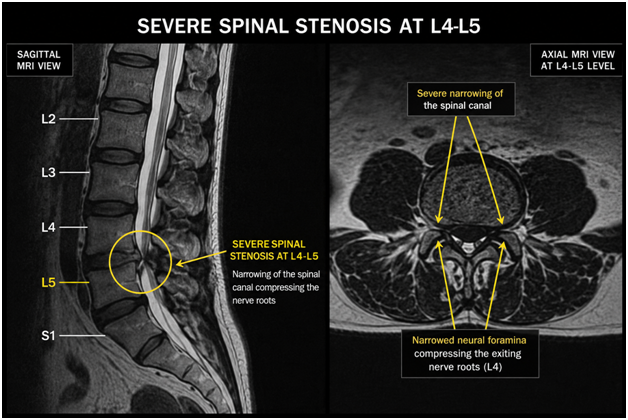
What is severe L4-L5 spinal stenosis?
The spine contains a central canal that protects the spinal cord, along with small openings called neural foramina, where individual spinal nerves exit. When these openings become narrower than normal, the condition is known as foraminal stenosis.
If the narrowing occurs within the spinal canal itself, it is called spinal stenosis. Many people have both conditions at the same time, especially as they get older.
The L4-L5 segment is one of the most active parts of the lower spine. It supports much of your body weight while allowing you to bend, twist, lift, and walk. Because of the constant stress placed on this area, it is particularly prone to wear and tear.
When narrowing becomes significant, it may lead to severe spinal canal stenosis and compress the L4 or L5 nerve roots. This often causes pain that extends beyond the back into the hips, buttocks, legs, and feet.
Severe spinal stenosis L4-L5 symptoms
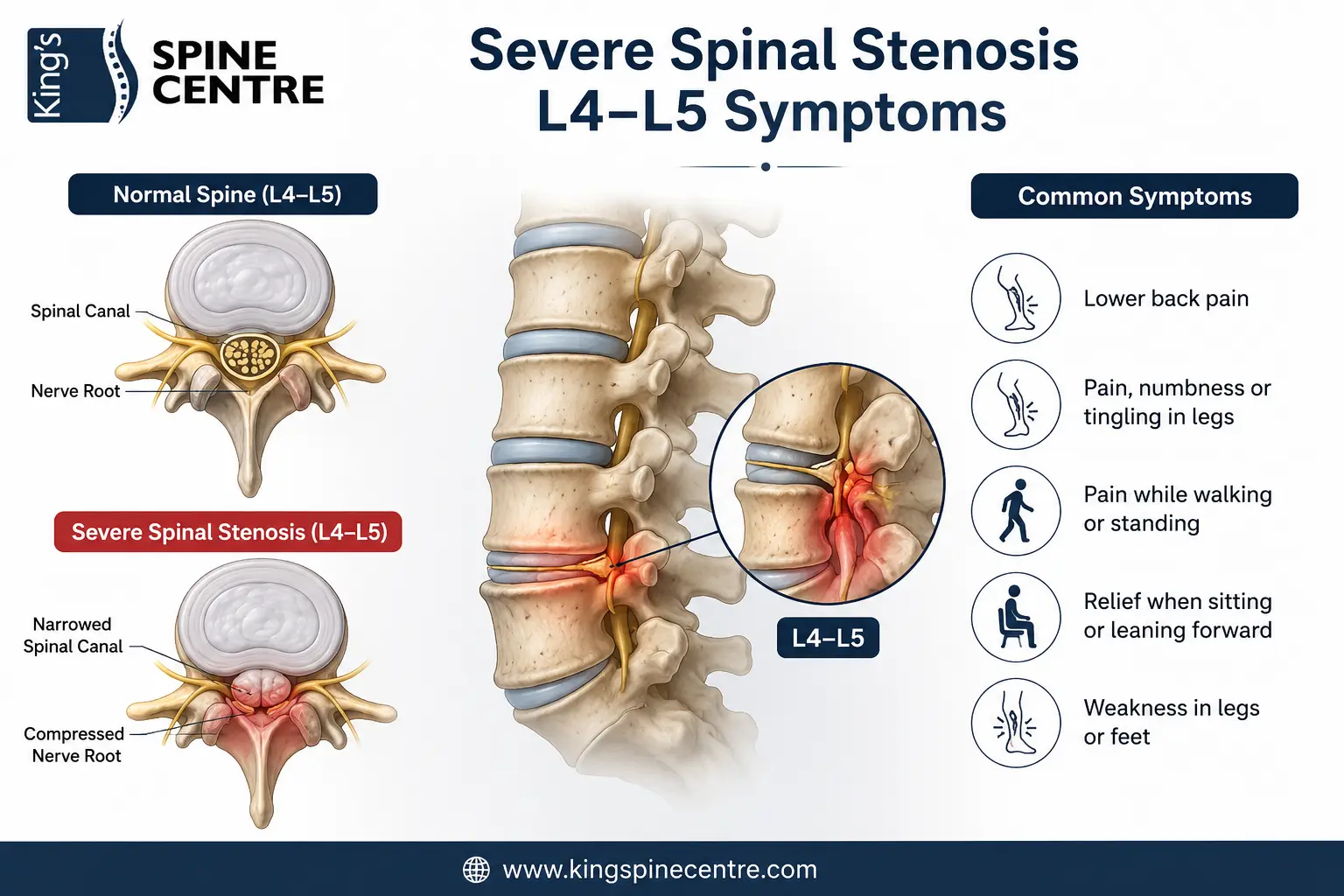
The symptoms of severe Spinal Stenosis L4-L5 symptoms vary depending on how much pressure is placed on the nerves. Some people experience occasional discomfort, while others find their daily routine increasingly limited.
Common lumbar spinal stenosis symptoms include:
- Persistent lower back pain
- Tingling or “pins and needles” sensations
- Numbness in the feet or toes
- Muscle weakness
- Leg cramps while walking
- Difficulty standing for long periods
Many patients also experience L4-L5 pain symptoms, particularly after standing or walking for several minutes.
As the condition progresses, L4-L5 nerve root compression symptoms may become more noticeable. These symptoms can range from weakness when lifting the foot and difficulty on the stairs, to that worrying sensation that the leg might give way.
Prolonged nerve compression can lead to L4-L5 nerve damage symptoms, including significant muscle weakness or changes in bladder and bowel control. Either of these warrants urgent medical attention.
Symptom overview
Symptom | What you may notice |
Lower back pain | Constant or activity-related discomfort |
Leg pain | Pain travelling into the buttock, thigh or calf |
Numbness | Reduced feeling in the foot or leg |
Muscle weakness | Difficulty lifting the foot or climbing stairs |
Tingling | Pins and needles sensation |
What does research say? Research suggests that lumbar spinal stenosis is one of the most common spinal conditions affecting adults over the age of 60. As life expectancy continues to increase, the number of people living with this condition is expected to grow. |
What causes L4-L5 spinal stenosis?
Most cases develop gradually as part of the natural ageing process, although several factors can contribute to narrowing around the nerves.
Common causes include:
Age-related degeneration
Spinal discs naturally dry out and become thinner with age, which tightens the space nerves need and puts added pressure on the joints nearby.
Bone spurs
Arthritis may lead to extra bone formation around the joints of the spine, narrowing the nerve openings.
Thickened ligaments
The ligaments supporting the spine can become thicker with age, reducing space inside the spinal canal.
Degenerative spondylolisthesis
This occurs when one vertebra slips slightly over another, contributing to spinal stenosis L4-L5 and nerve compression.
Previous spinal injuries
Fractures, trauma, or previous spinal surgery may alter the normal alignment of the spine.
Congenital narrowing
Some people are naturally born with a narrow spinal canal, making symptoms appear earlier in life.
How is severe L4-L5 spinal stenosis diagnosed?
An accurate diagnosis begins with understanding your symptoms and how they affect your daily life.
Your spine specialist will usually perform:
- A detailed medical history
- Physical examination
- Muscle strength testing
- Sensation and reflex assessment
- Walking and balance evaluation
Imaging tests help confirm the diagnosis.
MRI is usually the preferred investigation because it clearly shows nerves, discs, and areas of severe spinal canal stenosis L4-L5.
Based on your symptoms, your doctor may also suggest:
- X-rays to assess spinal alignment
- CT scans for detailed bone evaluation
- Nerve conduction studies in selected cases
A thorough assessment helps determine whether your symptoms are caused by L4-L5 spinal stenosis or another condition affecting the spine or nerves.
Non-surgical treatment for L4-L5 spinal stenosis
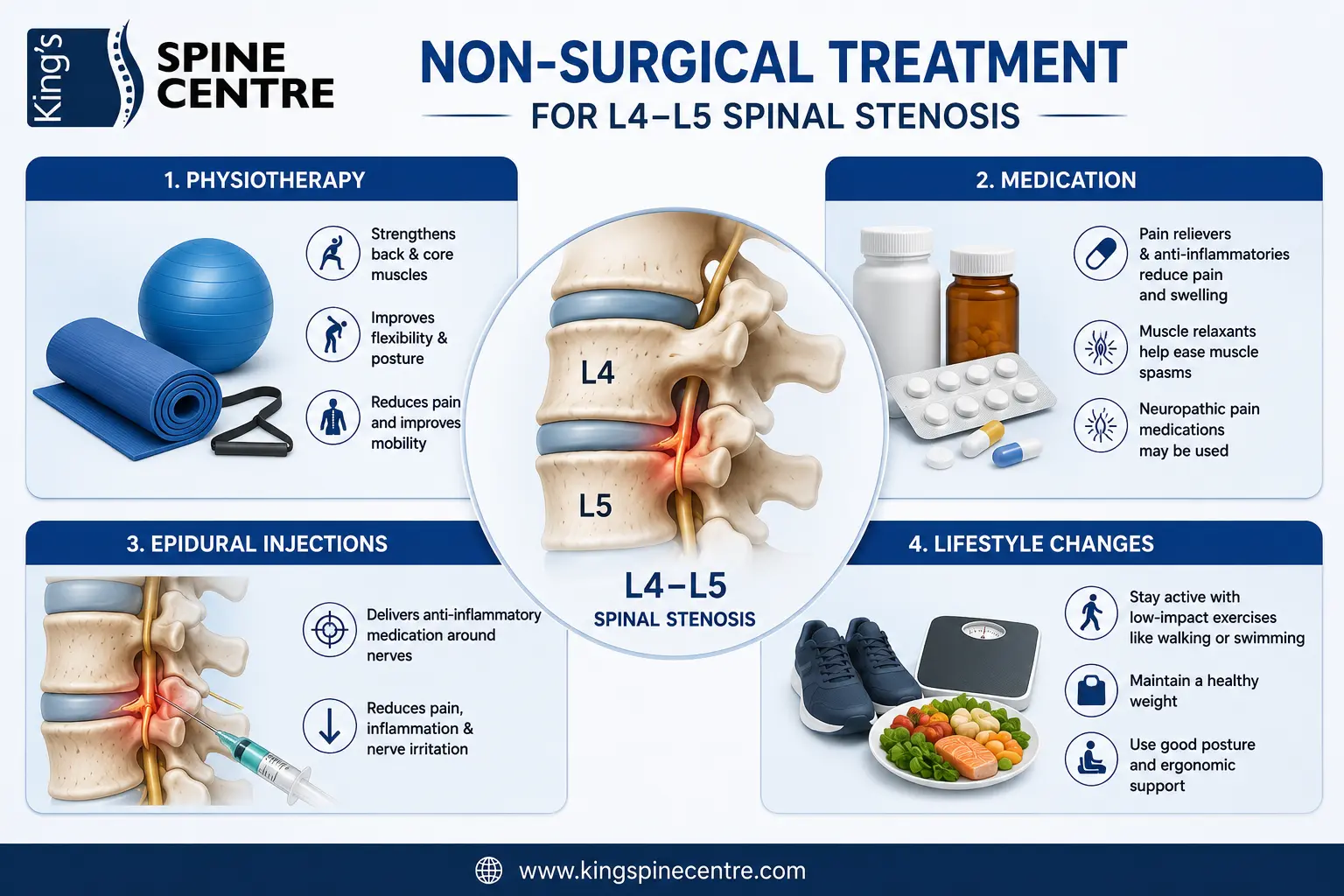
Not everyone with spinal stenosis L4-L5 treatment needs surgery. For many patients, conservative care makes a real difference, and that’s particularly true when symptoms are picked up early.
Treatment may include:
- Physiotherapy to improve flexibility and strengthen the muscles supporting the spine
- Anti-inflammatory medication to reduce pain and swelling
- Nerve pain medication when symptoms radiate into the legs
- Activity modification to avoid positions that worsen symptoms
- Weight management to reduce stress on the lower back
- A personalised exercise programme to improve mobility and endurance
Treatment | Purpose | Best for |
Physiotherapy | Improve strength and movement | Mild to moderate symptoms |
Medication | Reduce pain and inflammation | Short-term symptom control |
Epidural injections | Calm irritated nerves | Persistent leg pain |
Lifestyle changes | Reduce pressure on the spine | Long-term management |
For many people, a combination of these treatments helps relieve pain and delay or even avoid the need for surgery.
When is surgery needed for severe L4-L5 spinal stenosis?
While many people improve with physiotherapy, medication, and lifestyle changes, surgery may be recommended if symptoms continue to worsen or begin to affect mobility and independence.
Your spine specialist may discuss surgery for spinal stenosis L4-L5 if you have:
- Persistent leg pain despite several months of conservative treatment
- Progressive muscle weakness
- Increasing numbness or tingling
- Difficulty walking even short distances
- Severe L4-L5 stenosis symptoms that interfere with daily activities
- Imaging showing significant nerve compression
Common surgical procedures include:
Lumbar Decompression (Laminectomy)This is one of the most frequently performed procedures for severe spinal stenosis. It involves the elimination of a small portion of bone and thickened tissue to create more space for the nerves. | ForaminotomyIf narrowing mainly affects the nerve opening (foramen), a foraminotomy may be performed to widen that space and relieve pressure on the compressed nerve root. | Spinal FusionIn some cases, particularly when there is spinal instability or spondylolisthesis, spinal fusion can be recommended alongside decompression to stabilise the affected segment. |
Recovery after L4-L5 spinal stenosis surgery
Recovery varies depending on the type of procedure performed, your overall health, and how long the nerves were compressed before treatment.
A typical recovery timeline may look like this:
Recovery Stage | What to Expect |
First 24–48 hours | Walking with assistance, pain management |
First 2 weeks | Gradual increase in daily activities |
2–6 weeks | Light walking and gentle exercises |
6–12 weeks | Improved mobility and return to many normal activities |
3–6 months | Continued recovery and strengthening, depending on the procedure |
While surgery can effectively relieve nerve compression, recovery is a gradual process. Nerves that have been compressed for a long time may take several months to recover, and in some cases, symptoms such as numbness may improve more slowly than pain.
When should you see a spine specialist?
Back pain is common, but persistent symptoms should never be ignore, especially when they begin affecting your legs or mobility.
You should arrange an assessment if you experience:
- Back pain lasting longer than a few weeks
- Pain that radiates into one or both legs
- Persistent numbness or tingling
- Weakness in the foot or leg
- Difficulty walking or standing
- Frequent falls or balance problems
Early diagnosis allows treatment to begin before permanent nerve damage develops. At King’s Spine Centre, the multidisciplinary spine team use advanced diagnostic imaging and evidence-based treatments to help patients find lasting relief and return to their daily activities safely.
Key takeaways about severe L4-L5 spinal stenosis
Foraminal stenosis can have a significant impact on your comfort, mobility, and quality of life, particularly when it affects the L4-L5 level. Although symptoms often develop gradually, they should not be dismissed as a normal part of ageing.
Recognising severe spinal stenosis L4-L5 symptoms early can make a meaningful difference, allowing treatment to begin before nerve damage becomes permanent.
If you’re experiencing ongoing back pain, leg pain, or signs of severe spinal stenosis L4-L5 Symptoms, seeking an expert evaluation can help you understand your options.
At King’s Spine Centre, the spine specialists are committed to providing personalised care focused on relieving pain, and helping you return to the activities that matter most.
Frequently Asked Questions (FAQs)
What are the symptoms of severe spinal stenosis L4-L5?
Common symptoms include lower back pain, leg pain, numbness, tingling, muscle weakness, reduced walking distance, and L4-L5 nerve root compression symptoms. Severe cases may also affect bladder or bowel function.
Can severe L4-L5 spinal stenosis heal without surgery?
The narrowing itself usually does not reverse, but many patients successfully manage symptoms with physiotherapy, medication, activity modification, and injections without needing surgery.
What is the best treatment for L4-L5 spinal stenosis?
The most appropriate spinal stenosis L4-L5 treatment depends on symptom severity. Conservative treatments are often effective, while surgery may be recommended for persistent pain or progressive nerve compression.
How serious is severe spinal stenosis at L4-L5?
The impact of severe spinal stenosis on mobility and quality of life can be considerable. When treatment is delayed or avoided, ongoing nerve compression can eventually lead to permanent weakness or irreversible nerve damage.
Can L4-L5 spinal stenosis cause leg weakness?
Yes. Compression of the L4 or L5 nerve roots can cause muscle weakness, difficulty lifting the foot, balance problems, and changes in walking.
What happens if severe spinal stenosis is left untreated?
Untreated severe spinal canal stenosis may lead to worsening pain, increasing weakness, reduced mobility, chronic nerve damage, and, in rare cases, permanent bladder or bowel dysfunction requiring urgent medical care.
Medical Disclaimer
This content is for informational purposes only and is not a substitute for professional medical advice, diagnosis, or treatment. Always consult your physician or a qualified healthcare provider regarding any medical questions, symptoms, or conditions.
Medically Reviewed
Reviewed by the spine care team at King’s Spine Centre, Dubai — a multidisciplinary team of spine specialists, neurosurgeons, pain management physicians and physiotherapists following evidence-based, JCI-accredited care standards.
