


Is Gabapentin Good for Sciatica and Back Pain?
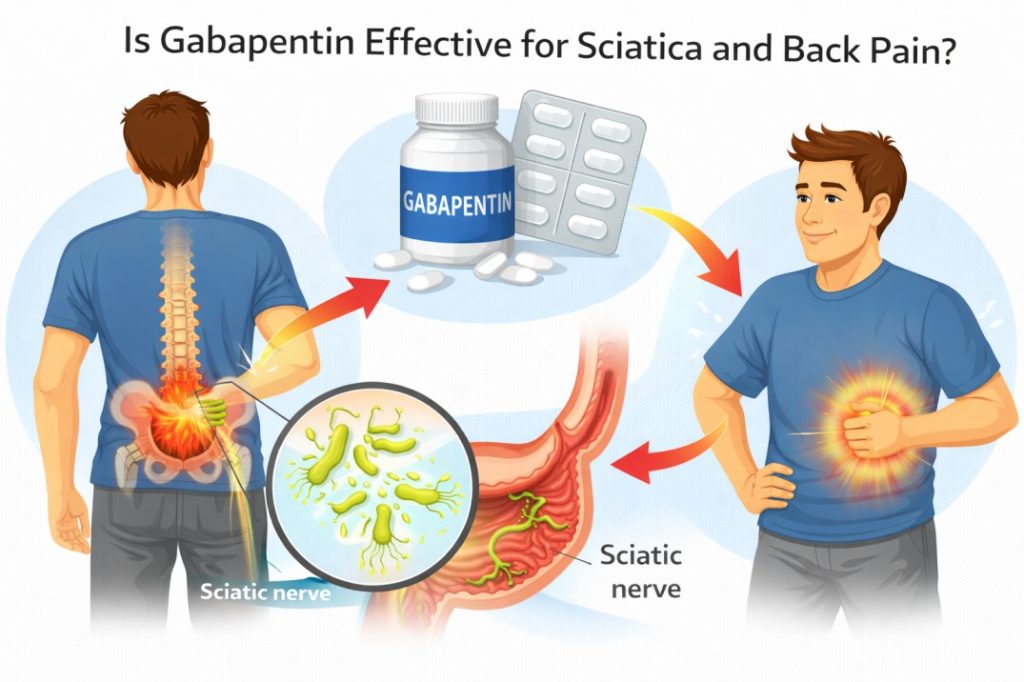
If you have ever felt a sharp, electric-like shock shoot from your lower back down to your toes, you know that sciatica and gabapentin are two terms that often appear together in medical consultations. Chronic back pain and nerve irritation can be debilitating, affecting everything from your sleep quality to your ability to walk.
When standard over-the-counter painkillers like ibuprofen fail to provide relief, many patients are prescribed gabapentin for sciatica or gabapentin for back pain. Originally developed to treat epilepsy, this medication—often known by the brand name Neurontin for sciatica—has become a cornerstone in the world of sciatic nerve pain prescription medication.
But does it actually work? Does it fix the root cause of the pain, or simply mask the symptoms? And is gabapentin good for sciatica specifically?
In this guide, we will explore the research behind this medication, its effectiveness for various spinal conditions, whether it truly helps nerve-related pain like sciatica, and how it compares to other available treatment options.
What Is Gabapentin and How It Works for Nerve Pain
To understand why a doctor would prescribe an anti-seizure medication for your back, we first have to look at how nerves communicate. When a nerve in your spine is compressed or irritated, it becomes “hypersensitive.” It begins to fire rapid, chaotic electrical signals to the brain. Your brain interprets these signals as burning, tingling, or sharp pain.
Gabapentin is not an NSAID (Non-Steroidal Anti-Inflammatory Drug). While an NSAID like aspirin or naproxen reduces the chemical inflammation around a joint, gabapentin works directly on the electrical “volume” of the nervous system.
The Mechanism of Nerve Calming
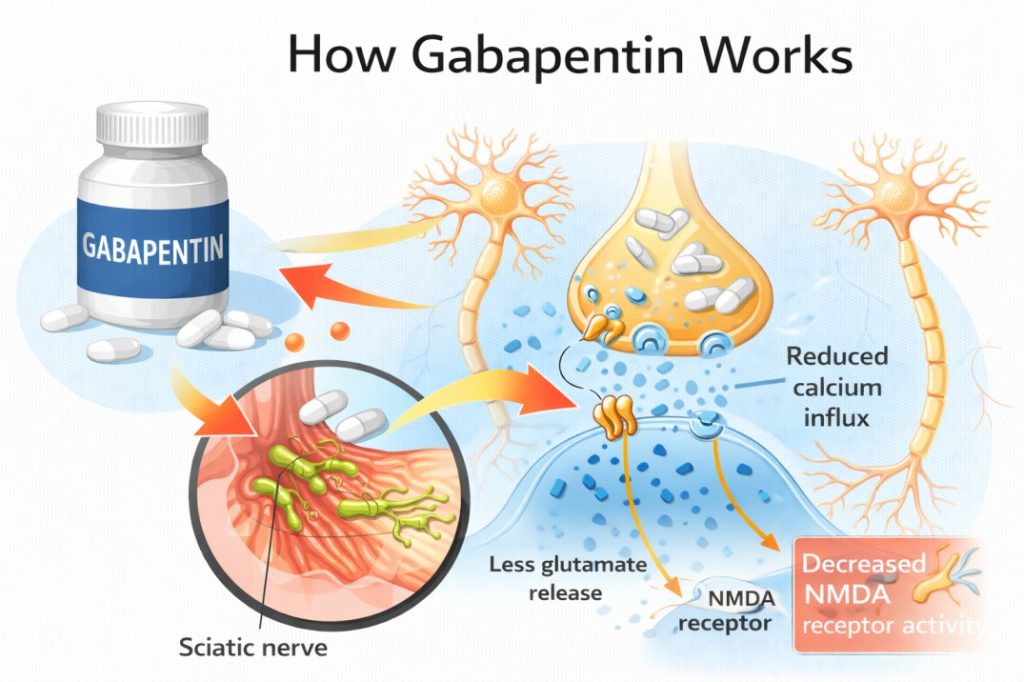
Specifically, gabapentin interacts with the calcium channels in your central nervous system. By binding to these channels, it reduces the release of excitatory neurotransmitters—the chemicals that tell your brain “this hurts!”
For someone suffering from sciatic nerve pain, the gabapentin medicine for sciatic nerve pain acts as a stabilizer. It doesn’t physically move a herniated disc or widen a narrowed spinal canal, but it helps the nerve become less reactive to those physical stressors. This is why many patients find that while the physical “pressure” in their back remains, the “fire” in their leg begins to dim.
Does Gabapentin Help Sciatica and Sciatic Nerve Pain?
When patients ask, “Does gabapentin help sciatica?” the answer is often a qualified “yes,” but with important caveats. Sciatica is not a disease in itself; it is a symptom of an underlying issue, such as a pinched nerve or a herniated disc.
What the Research Says
Clinical studies from the last several years have shown mixed results regarding gabapentin for sciatica pain.
- Neuropathic Relief: For patients whose primary symptom is “neuropathic”—meaning they feel burning, numbness, or “pins and needles”—the medication tends to be quite effective.
- Radiculopathy: If the pain is “radicular” (shooting down the leg), gabapentin can help dampen the intensity of those shocks.
- The “Wait and See” Approach: Many physicians prescribe gabapentin for sciatica during the first 6–12 weeks of symptoms. Since many cases of sciatica resolve on their own, the medication serves as a bridge, making the pain tolerable while the body heals naturally.
Why Gabapentin Doesn't Work for Everyone
You may have heard a friend say that gabapentin sciatica treatment changed their life, while another says it did nothing. This is because is gabapentin good for sciatica depends entirely on the degree of nerve damage. If a nerve is severely compressed by a large bone spur, the mechanical pressure may be too high for medication alone to overcome.
Gabapentin for Back Pain – When It Works and When It Doesn’t
A common question in clinics is: “Will gabapentin help with back pain?” The answer depends on whether the pain is “mechanical” or “neuropathic.”
Mechanical vs. Neuropathic Back Pain
- Mechanical Pain: This is pain in the muscles, tendons, or joints (facet joints) of the spine. If you pulled a muscle lifting a heavy box, gabapentin help with back pain is unlikely. This type of pain is better suited for anti-inflammatories or physical therapy.
- Neuropathic Pain: This is pain originating from the nerves. If your back pain feels like a constant “hum” of electricity or if it radiates into your glutes or legs, then gabapentin for back nerve pain may be highly beneficial.
Chronic Lower Back Pain
For those wondering, “Does gabapentin help with lower back pain?” the research suggests it is most useful for chronic cases. When back pain lasts for months, the nervous system can enter a state of “central sensitization.” In this state, the brain becomes hyper-aware of pain signals. Gabapentin for back pain can help “re-set” this sensitivity threshold, providing a window of relief that allows the patient to engage in corrective exercises.
Conditions Where Gabapentin May Help
Since “back pain” is a broad term, let’s look at specific diagnoses where can gabapentin be used for back pain effectively.
Gabapentin for Herniated Disc
A herniated (or slipped) disc occurs when the soft inner core of a spinal disc leaks out and touches a nearby nerve. This causes intense chemical irritation. Gabapentin for herniated disc treatment is common because it specifically targets the resulting nerve inflammation. While it won’t shrink the gabapentin herniated disc protrusion, it can significantly reduce the leg pain associated with it.
Gabapentin for Spinal Stenosis
Spinal stenosis is the narrowing of the spaces within your spine, which puts pressure on the nerves. This often causes gabapentin for leg pain and heaviness when walking. Gabapentin for spinal stenosis can help manage the “cramping” sensation in the legs that occurs when the nerves are crowded, helping patients maintain their mobility.
Gabapentin for Pinched Nerve
Whether it’s caused by a bone spur or a shifted vertebra, a pinched nerve sends distress signals. Gabapentin for pinched nerve symptoms works by quieting those distress signals. It is often the first line of defense before more invasive treatments like injections are considered.
Gabapentin for Muscle Spasms
While not a traditional muscle relaxant, gabapentin for muscle spasms is sometimes used when the spasms are a secondary reaction to nerve pain. When a nerve is in pain, the surrounding muscles often “guard” or lock up. By reducing the nerve pain, gabapentin help with back pain by indirectly allowing those muscles to release.
Gabapentin for Nerve Pain in Legs
One of the most distressing symptoms of spine issues is gabapentin weakness in legs or a heavy, “dead-weight” feeling. While gabapentin doesn’t restore muscle strength (that requires removing the pressure on the nerve), gabapentin for nerve pain in legs can reduce the uncomfortable sensations of coldness, heat, or itching that often accompany nerve compression.
Is Gabapentin a Good Option Compared to Other Sciatica Medications?
When you are in pain, you want the most effective sciatica medication available. How does gabapentin stack up?
Gabapentin vs. NSAIDs
As mentioned, gabapentin nsaid comparisons are common. NSAIDs (like Naproxen or Celebrex) are great for acute “bone-on-bone” or muscle pain. However, they don’t do much for the “zapping” feeling of sciatica. Doctors often find that a combination of a low-dose gabapentin and sciatica-focused anti-inflammatory works better than either one alone.
Gabapentin vs. Opioids
In the past, opioids were frequently prescribed for back pain. However, we now know that opioids are not particularly effective for nerve pain and carry a high risk of addiction. Is gabapentin good for sciatic nerve pain compared to opioids? Yes, because it targets the actual mechanism of the nerve signal rather than just dulling the brain’s perception of all pain.
Gabapentin vs. Pregabalin (Lyrica)
Pregabalin is a “cousin” to gabapentin. It works similarly but is absorbed more quickly by the body. Some patients who find that does gabapentin work for sciatica but causes too much grogginess may find better success with Pregabalin, though it is often more expensive.
When Gabapentin Is Not Enough – Seeing a Spine Specialist
While medication can be a literal lifesaver for managing day-to-day discomfort, it is rarely a “cure” for structural spine problems. If you find that you are relying on increasing doses of gabapentin for sciatic nerve pain without seeing real improvement in your mobility, it may be time to look beyond the pharmacy.
The Limits of Medication
Does gabapentin help with sciatica pain forever? Usually, no. Medication is a tool to manage symptoms while the underlying cause is addressed. If you have:
Pain that prevents you from sleeping despite medication.
Gabapentin weakness in legs that makes you stumble or trip.
Numbness that is spreading.
Pain that returns the moment the medication wears off.
…then you need a comprehensive diagnosis.
Specialist Care in Dubai
For those in the UAE, seeking a trusted authority in spine health is essential. King’s Spine Centre Dubai is a premier facility that specializes in moving patients from “management” to “recovery.” At a center like King’s, the approach isn’t just about writing a prescription for gabapentin for back pain; it’s about using advanced diagnostics to see exactly which nerve is being affected and why.
Whether it’s through targeted spinal injections, advanced physical therapy, or minimally invasive procedures, the goal of a specialist is to eventually make the medication unnecessary. If you’ve been asking “will gabapentin help with back pain?” for months without a clear answer, a specialist consultation can provide the clarity you need.
Conclusion: Taking the Next Step Toward Relief
So, is gabapentin good for sciatica? For many, it is a vital part of a recovery plan. It offers a way to dampen the “electrical storms” of nerve pain, allowing you to walk, work, and sleep. However, it is important to view gabapentin for back pain as a bridge rather than a destination.
If you are currently struggling with the question, “will gabapentin help sciatica in my specific case?” the best thing you can do is seek a professional diagnosis. Understanding whether your pain is mechanical, inflammatory, or neuropathic is the key to choosing the right treatment.
If you’re ready to move beyond medication and find a long-term solution for your spine health, consider reaching out to the experts at King’s Spine Centre Dubai. With the right combination of specialist care and patient-focused treatment, you can stop managing your pain and start living your life again.
Frequently Asked Questions (FAQs)
No. Unlike some painkillers, gabapentin for sciatica usually requires a “build-up” period. Most patients begin to feel a difference after 1 to 2 weeks of consistent use, as the medication needs to reach a steady state in the nervous system.
Typically, no. 300mg is often a starting “titration” dose. Doctors usually start low to see if you experience side effects like dizziness. For gabapentin back pain relief, maintenance doses often range from 900mg to 1800mg per day, split into three doses.
Yes. Since gabapentin is not an nsaid, it can generally be taken alongside anti-inflammatories, provided your doctor approves. They work on different pathways to provide “multimodal” pain relief.
Yes, it is one of the most common uses for the drug. While it won’t fix the gabapentin herniated disc itself, it quiets the chemical “burn” the disc causes when it touches the nerve.
Because gabapentin slows down nerve signaling, it can also have a sedative effect on the brain. This is the most common reason people stop taking neurontin for sciatica. Often, this sleepiness fades after the first two weeks.
No. You should never stop gabapentin “cold turkey.” Because it affects brain and nerve chemistry, you must taper off the dose slowly under a doctor’s supervision to avoid withdrawal symptoms like anxiety or insomnia.
Gabapentin is processed entirely by the kidneys. If you have decreased kidney function, your doctor must prescribe a much lower dose.
It is better at helping with the “nerve” part of the spasm. If your back is stiff due to arthritis or a muscle tear, a muscle relaxant or heat therapy may be more effective than gabapentin for back spasms.
Yes. If your condition (like spinal stenosis) is affecting nerves on both sides of the spine, the medication will work systemically to provide relief to both legs.
Gabapentin is least effective for “dull and achy” pain. It is specifically designed for pain that is sharp, hot, searing, or electric.
Medical Disclaimer
This content is for informational purposes only and is not a substitute for professional medical advice, diagnosis, or treatment. Always consult your physician or a qualified healthcare provider regarding any medical questions, symptoms, or conditions.
Medically Reviewed
Reviewed by the spine care team at King’s Spine Centre, Dubai — a multidisciplinary team of spine specialists, neurosurgeons, pain management physicians and physiotherapists following evidence-based, JCI-accredited care standards.
