


What Helps Nerve Pain in Legs After Back Surgery? A Relief and Recovery Guide
You had back surgery to feel better — so leg pain, burning, or tingling afterwards can be frustrating and worrying. The good news is that nerve pain after surgery is often part of the healing process, and there are proven ways to ease it. This guide from King’s Spine Centre in Dubai explains exactly what helps nerve pain in legs after back surgery, why it happens, how long it usually lasts, and the warning signs that mean you should call your surgeon.
Why Do You Get Nerve Pain in the Legs After Back Surgery?

Before looking at what helps nerve pain in legs after back surgery, it helps to understand the cause. The nerves that supply your legs and feet travel out from the lower spine, so any surgery in that area can leave them temporarily irritated.
Common reasons for nerve pain after surgery include:
A nerve “waking up.” If a nerve was compressed for months before surgery, it can fire off pain, tingling, and burning signals as it recovers. This is one of the most common — and most encouraging — causes.
Post-operative swelling. Inflammation around the surgical site can press on a healing nerve for a few weeks.
Surgical handling. Gentle stretching or retraction of a nerve during the operation can leave it sensitive for a while.
Scar tissue. As you heal, scar tissue can form around a nerve and cause delayed discomfort.
In most patients, this kind of nerve pain after back surgery improves steadily. Knowing what to do about it makes recovery far more comfortable.
What Helps Nerve Pain in Legs After Back Surgery? 7 Proven Options
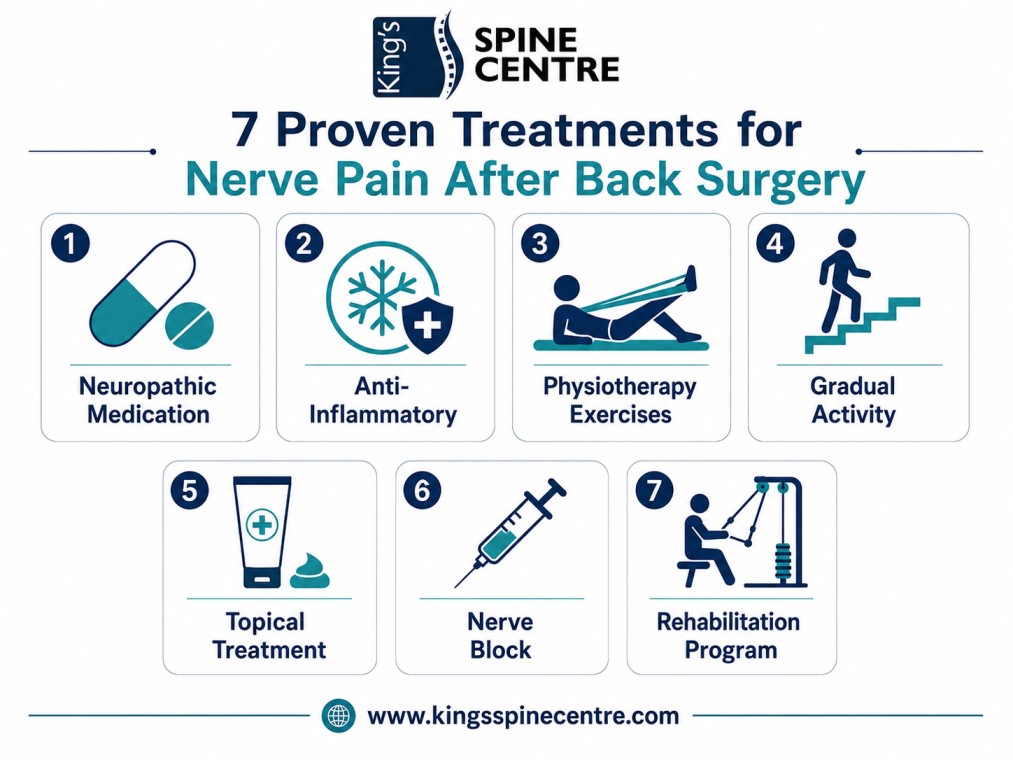
Here is a practical breakdown of what helps nerve pain in legs after back surgery, from first-line measures to advanced options your specialist may recommend.
- Neuropathic Pain Medication
Standard painkillers often do little for nerve pain because it behaves differently from ordinary pain. Medications that target the nerve pathways themselves — such as gabapentin, pregabalin, or duloxetine — are usually far more effective for the burning and shooting sensations of nerve pain after surgery. Your surgeon or pain specialist will choose and dose these for you.
- Anti-Inflammatory Treatment
Reducing swelling around the nerve can ease pressure and pain. Short courses of anti-inflammatory medication, and sometimes a targeted steroid, may be used in the early weeks. This is one of the simplest answers to what helps nerve pain in legs after back surgery in the immediate post-operative period.
- Physiotherapy and Nerve-Gliding Exercises
A structured physiotherapy programme is one of the most powerful long-term tools for nerve recovery. Gentle nerve-gliding (or “nerve flossing”) exercises, graded strengthening, and mobility work all help the nerve heal and prevent stiffness. Our spine physiotherapy in Dubai team designs these programmes specifically for post-surgical patients, which matters because the wrong exercises too early can set you back.
- Movement and Gentle Walking
Lying still for too long slows recovery. Short, frequent walks improve circulation, reduce stiffness, and support the nerves as they settle. Your surgical team will tell you how much is safe at each stage.
- Topical Relief
Lidocaine patches or capsaicin creams can calm localised burning or tingling and are a useful add-on when you are wondering what helps nerve pain in foot after back surgery specifically, where the discomfort is concentrated in one spot.
- Pain Management Procedures
When pain is more stubborn, a dedicated pain management service can offer targeted injections or nerve blocks to interrupt the pain signals and let you take part in rehabilitation more comfortably.
- Structured Rehabilitation
For more involved recoveries, a full spine rehabilitation programme combines physiotherapy, pain control, and gradual return-to-activity coaching. This multidisciplinary approach is often what helps the leg regain both comfort and strength.
What Helps Nerve Pain in the Foot After Back Surgery?
The foot is one of the most common places to feel lingering symptoms, because the nerves that supply it run all the way from the lower spine. If you are specifically asking what helps nerve pain in foot after back surgery, the same principles apply but with a few extra considerations.
Targeted measures that help include topical creams applied directly to the affected area, well-fitting supportive footwear that takes pressure off sensitive spots, and foot-specific physiotherapy exercises that retrain balance and sensation. Because numbness in the foot can affect how you walk, your physiotherapist may also check your gait to prevent you developing compensating habits that strain other joints. Persistent foot symptoms should always be reviewed, as they can sometimes point to a specific nerve root that needs closer attention.
Things to Avoid That Can Worsen Nerve Pain
Knowing what helps nerve pain in legs after back surgery is only half the picture — it is just as important to know what can set you back. In the early recovery period, try to avoid:
Heavy lifting, bending, or twisting before your surgeon clears you, as these can strain the healing area.
Sitting or lying still for long stretches, which stiffens the body and slows circulation to recovering nerves.
Stopping medication suddenly — neuropathic pain medicines usually need to be tapered, not stopped abruptly.
Pushing through sharp or worsening pain during exercise. Discomfort that eases as you move is normal; pain that escalates is a signal to stop and check in with your team.
Smoking, which reduces blood flow and is well known to slow nerve and bone healing.
Foods and Habits That Support Nerve Healing
Recovery is not only about treatment — daily habits play a real role too. Nerves repair faster when the body has the right building blocks and good circulation. A balanced diet rich in B vitamins, omega-3 fatty acids, and adequate protein supports nerve repair, while staying well hydrated and managing blood sugar (especially for those with diabetes) protects the nerves from further stress. Prioritising quality sleep matters because much of the body’s repair work happens overnight. Combined with your prescribed care, these simple habits reinforce everything else that helps nerve pain after surgery settle.
Nerve Pain After Spinal Fusion vs. Discectomy
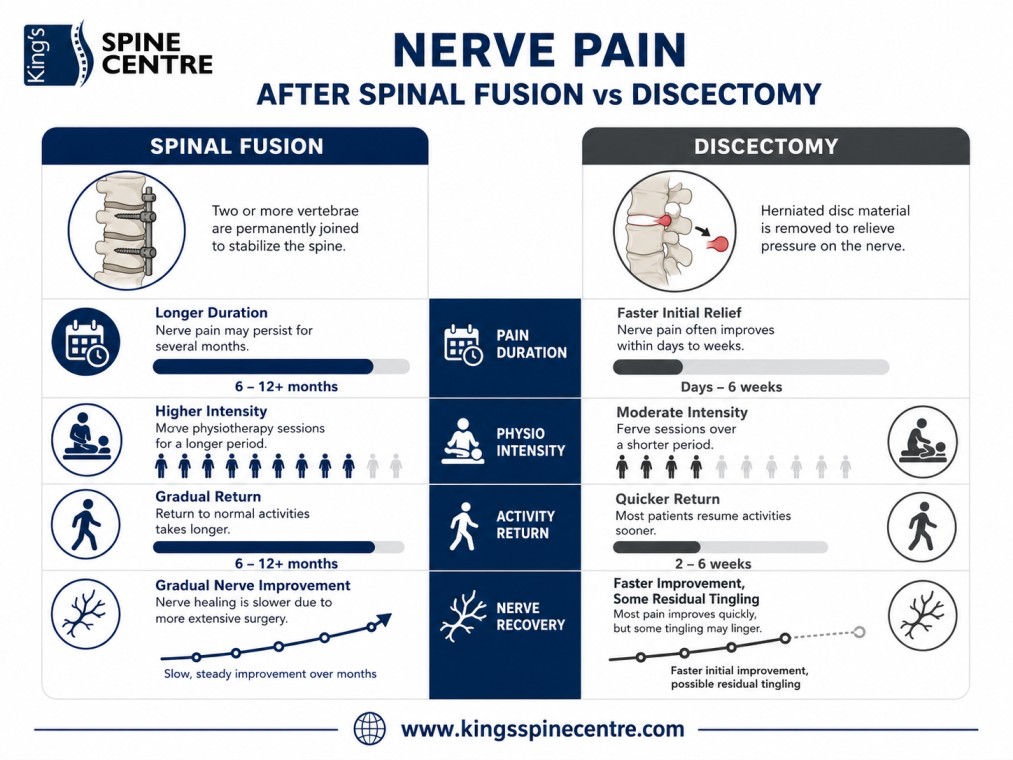
Patients often ask whether recovery differs by procedure — and it can.
Nerve pain after spinal fusion can take a little longer to settle because fusion involves more extensive work and hardware. Some aching around the fusion site, and nerve pain after spinal fusion that gradually eases over the first few months, is common. If you would like background on the procedure itself, see our overview of lumbar spine surgery in Dubai.
After a discectomy, many patients feel quick relief of their original leg pain, though some residual tingling can linger while the nerve recovers. Reassuringly, good nerve recovery after discectomy is the typical outcome, especially when patients follow their physiotherapy plan.
"Nerves Waking Up" After Surgery — A Good Sign
One of the more confusing experiences is the sensation of nerves waking up after surgery: new tingling, mild electric “zings,” or itching along the leg. While it can feel alarming, this is frequently a sign that a previously compressed nerve is regaining function. These nerves waking up after surgery sensations usually fade as healing continues. That said, always mention them to your surgeon so they can confirm everything is on track.

Can Back Surgery Cause Neuropathy?
Some patients develop neuropathy after back surgery — ongoing nerve dysfunction that causes numbness, tingling, or burning, often in the feet. It is uncommon, and risk is higher in people who already have conditions such as diabetes. The encouraging news is that neuropathy after back surgery is treatable: a combination of the right medication, physiotherapy, and pain management can substantially improve symptoms and quality of life.
How Long Does Nerve Pain Last After Back Surgery?
There is no single timeline, but general patterns help set expectations:
First 2–6 weeks: Swelling-related pain is often at its peak, then begins to ease.
6–12 weeks: Many patients notice steady improvement as nerves settle and strength returns.
3–12 months: A nerve that was compressed for a long time before surgery may continue recovering gradually over this period.
Knowing what helps nerve pain in legs after back surgery at each stage — medication early on, then progressively more movement and physiotherapy — keeps your recovery on the right track. Slow improvement is normal; steady worsening is not.
Read – How long does it take for nerves to heal after back surgery?
Self-Care Tips to Support Nerve Recovery
Follow your physiotherapy programme consistently, even on good days.
Keep moving with short, regular walks rather than long periods of rest.
Take medication exactly as prescribed — don’t stop suddenly.
Manage underlying conditions such as diabetes, which slow nerve healing.
Prioritise sleep and good nutrition; nerves repair faster with proper support.
Avoid heavy lifting and twisting until your surgeon clears you.
When Nerve Pain Is a Warning Sign
Most nerve pain after surgery improves. But contact your surgeon promptly — or seek urgent care — if you experience:
New or worsening leg weakness
Sudden, spreading numbness
Severe pain that rapidly escalates
Any loss of bladder or bowel control
These can indicate ongoing nerve compression or a complication that needs review. If your symptoms feel more like new signs of nerve injury than ordinary healing, our companion guide on the symptoms of nerve damage after back surgery explains what to look for.

Why Choose King's Spine Centre, Dubai
As part of King’s College Hospital, King’s Spine Centre offers a complete recovery pathway under one roof — from neuropathic pain medication and pain management to expert physiotherapy and full rehabilitation. Our team of UK-, US-, and internationally trained spine surgeons and neurosurgeons, led by Director Prof. Dr. Imtiaz Hashmi, focuses on minimally invasive techniques designed to protect nerves and speed recovery. If leg pain is holding you back, you can meet the full clinical team and get a personalised plan.
Final Thoughts
Leg pain after spine surgery is common, usually temporary, and very treatable. Understanding what helps nerve pain in legs after back surgery — the right medication early, anti-inflammatory care, then physiotherapy and gradual movement — puts you in control of your recovery. Be patient with the process, watch for the warning signs, and lean on your care team when you need to.
If nerve pain after surgery is interfering with your daily life, you don’t have to manage it alone. Book a consultation with King’s Spine Centre in Dubai for an expert assessment and a recovery plan built around you.
Frequently Asked Questions (FAQs) About What Helps Nerve Pain in Legs After Back Surgery
What helps nerve pain in legs after back surgery?
Effective options include neuropathic pain medication (such as gabapentin or pregabalin), anti-inflammatory treatment, physiotherapy with nerve-gliding exercises, gentle walking, topical creams, and pain management procedures. A combined plan guided by your spine team usually works best.
Is nerve pain normal after back surgery?
Yes. Some nerve pain, tingling, or burning is common as nerves recover from compression and surgical swelling. It typically improves over weeks to months. Worsening pain or new weakness is not normal and should be reviewed.
How long does nerve pain last after spinal fusion?
Nerve pain after spinal fusion often eases over the first few months, though a previously compressed nerve can keep recovering for up to a year. Consistent physiotherapy supports a faster, fuller recovery.
What does it mean when nerves are waking up after surgery?
Tingling, mild zaps, or itching can signal that a compressed nerve is regaining function — often a positive sign. These sensations usually fade with healing, but mention them to your surgeon to confirm progress.
When should I worry about leg pain after back surgery?
Seek urgent help for new or worsening leg weakness, sudden spreading numbness, rapidly escalating pain, or any loss of bladder or bowel control.
What helps nerve pain in the foot after back surgery specifically?
Topical creams, supportive footwear, foot-focused physiotherapy and balance exercises, and prescribed neuropathic medication all help. Because foot symptoms can point to a specific nerve root, persistent numbness or tingling in the foot should be assessed by your spine specialist.
Can I exercise with nerve pain after surgery?
Gentle, guided movement is usually encouraged and helps recovery, but it should follow your surgeon’s and physiotherapist’s instructions. Avoid heavy lifting and twisting until cleared. Mild discomfort that eases as you move is normal; pain that sharply worsens means you should stop and seek advice.
Medical Disclaimer
This content is for informational purposes only and is not a substitute for professional medical advice, diagnosis, or treatment. Always consult your physician or a qualified healthcare provider regarding any medical questions, symptoms, or conditions.
Medically Reviewed
Reviewed by the spine care team at King’s Spine Centre, Dubai — a multidisciplinary team of spine specialists, neurosurgeons, pain management physicians and physiotherapists following evidence-based, JCI-accredited care standards.
