


What is the best treatment for Arthritis in lower back?
At a glance: What is the best treatment for Arthritis in lower back? The best treatment for arthritis in lower back is usually a combination of non-surgical approaches tailored to your symptoms and overall health. Most people find relief with physical therapy, regular low-impact exercise, weight management, anti-inflammatory medications, and lifestyle changes. If pain continues despite conservative treatment, your doctor may recommend spinal injections or, in some cases, surgery. Early diagnosis and a personalized treatment plan can help reduce pain, improve mobility, and keep you active. |
If you are waking up with a stiff, aching lower back that takes an hour to loosen up, you might be dealing with spinal arthritis. Managing chronic back pain can feel overwhelming, but finding relief is entirely possible. Understanding your options is the first step toward reclaiming your mobility.
When searching for relief, most patients ask a fundamental question: What is the best treatment for arthritis in lower back?
The answer is not a single quick fix. Instead, it is a combination of lifestyle changes, targeted physical therapies, and non-invasive medical care tailored to your unique needs.
What is Spinal Arthritis?
Spinal arthritis, also called arthritis of the spine, is inflammation in the joints that connect the bones of your spine. Your spine has small joints called facet joints that let you bend and twist.
Over time, the cartilage that cushions the joints can break down. This wear and tear is known as osteoarthritis, and it’s the most common type of spine arthritis you’ll come across.
It can affect any part of your spine, but lower back arthritis, which involves your lumbar spine, is one of the most frequent forms because this area carries most of your body weight
What causes Arthritis in lower back?
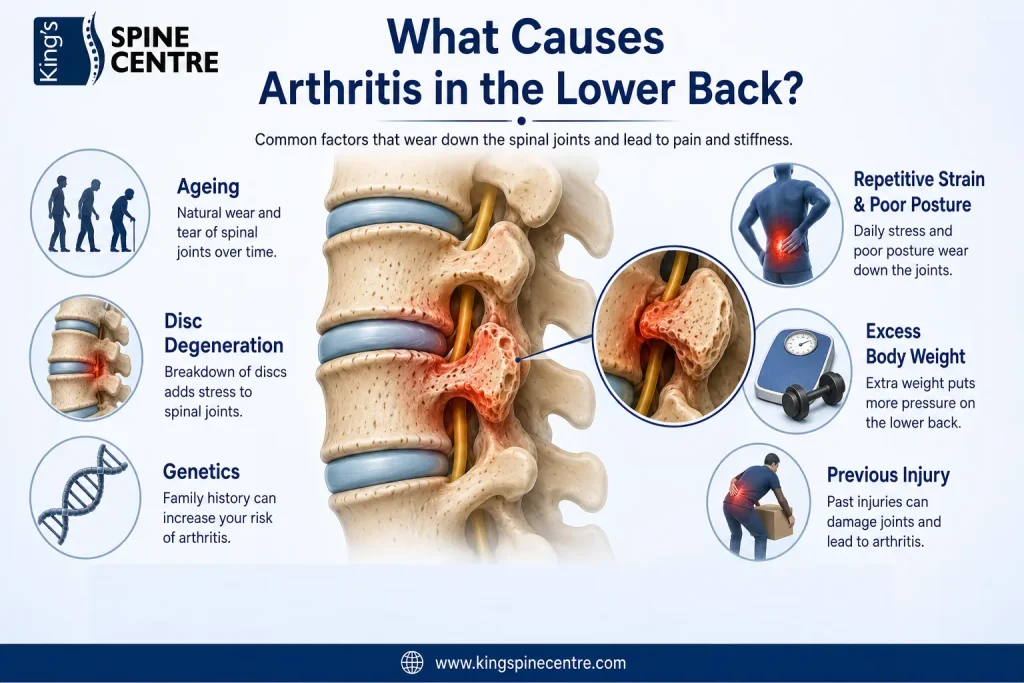
Arthritis in the lower back usually develops slowly, and a few factors raise your risk:
- Age: Cartilage naturally wears down as you get older.
- Repetitive stress: Jobs or activities that involve heavy lifting or twisting put extra strain on your spine.
- Excess body weight: Carrying extra weight adds pressure to your lower back joints.
- Past injuries: An old back injury can speed up joint breakdown later on.
- Genetics: A family history of arthritis can make you more likely to develop it too.
- Smoking: Tobacco use speeds up cartilage loss and can make lower back pain worse.
- Poor posture and weak core muscles: Poor spinal support can increase joint stress, worsening symptoms over time.
You can’t control every risk factor, but staying active, keeping a healthy weight, and avoiding tobacco can lower your chances of developing painful spinal arthritis.
What are the symptoms of Arthritis in lower back?
Arthritis in lower back symptoms can develop gradually and often become more noticeable over time. While the severity varies from person to person, the pain and stiffness can interfere with everyday activities if left untreated.
Watch for:
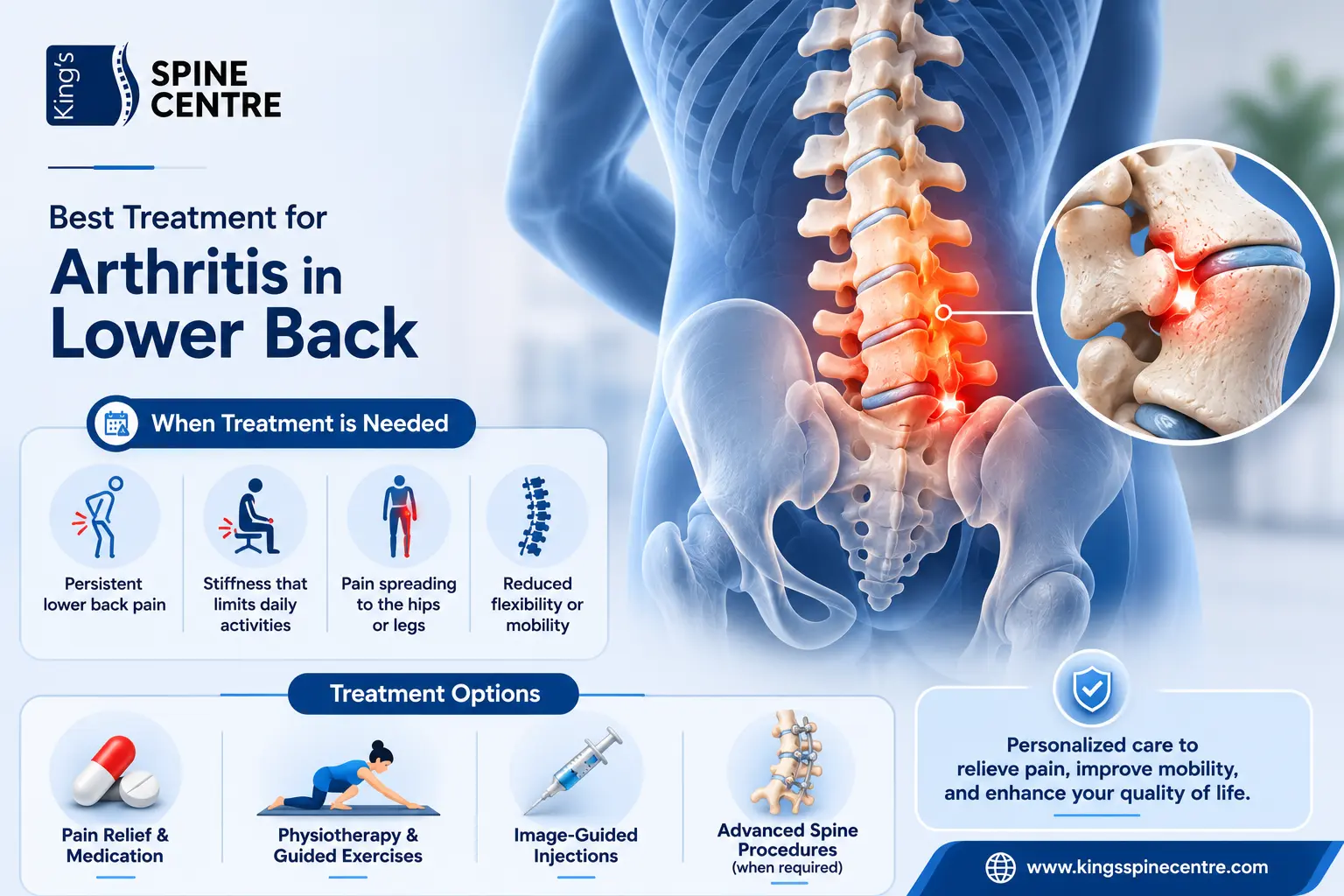
- Stiffness in your lower back, especially in the morning or after sitting for a while.
- A dull, aching pain that improves with light movement but worsens with rest.
- Reduced flexibility, making it harder to bend, twist, or straighten your back.
- Tenderness around the affected joints in the lower back.
- Pain that spreads into your hips or buttocks.
- A grinding or clicking sensation when moving the spine due to worn joint surfaces.
- In more advanced cases, numbness, tingling, or weakness in your legs if a nerve becomes involved.
If you notice pain radiating down one or both legs, or any weakness while walking, it’s worth talking to a doctor soon rather than waiting it out.
How is Spinal Arthritis diagnosed?
Diagnosing spinal arthritis usually starts with a conversation about your symptoms and a physical exam. Your specialist will check your range of motion and look for tenderness or signs of nerve involvement. From there, imaging helps confirm the diagnosis:
- X-rays show bone spurs, joint narrowing, and cartilage loss.
- MRI scans give a detailed look at soft tissue and can reveal nerve compression.
- CT scans are sometimes used for a closer look at bone structure.
Not everyone with arthritis visible on imaging has symptoms, so your doctor will match your scan results with what you’re actually feeling before recommending treatment.
What is the best treatment for Arthritis in lower back?
There isn’t a single fix that works for everyone, but most patients respond well to a step-by-step approach that starts conservative and only moves toward stronger treatment if needed.
Non-surgical treatment options
For most people, this is where lower back arthritis treatment begins and often ends:
- Physical therapy: A guided program strengthens the muscles that support your spine, improves flexibility, and helps reduce pain while improving movement.
- Regular low-impact exercise: Walking, swimming, cycling, and stretching help keep your joints flexible, reduce stiffness, and support your back.
- Weight management: Maintaining a healthy weight reduces stress on your lower back and may help ease pain while slowing further joint wear.
- Anti-inflammatory medication: Medications such as NSAIDs may help reduce pain and inflammation, making it easier to stay active. Always use them as directed by your healthcare provider.
- Heat and cold therapy: Applying heat can relax tight muscles, while cold packs help reduce inflammation and ease pain during flare-ups.
- Posture correction: Improving your posture and using proper lifting techniques can reduce strain on your spine and support long-term back health.
Advanced interventional therapies
If first-line options do not provide enough relief, a spinal specialist may recommend targeted, image-guided injections:
- Facet Joint Injections: Corticosteroids injected directly into the arthritic joint can provide months of profound anti-inflammatory relief.
- Radiofrequency Ablation (RFA): If a temporary nerve block successfully isolates your pain, a specialist can use focused heat energy to create a tiny lesion on the medial branch nerves. This safely blocks the joint’s pain signals from reaching your brain, often providing relief for six months to a year.
When is surgery necessary for lower back Arthritis?
Surgery is usually a last resort. It’s considered when arthritis compresses a spinal nerve, causing ongoing weakness, numbness, or loss of function that doesn’t improve with other treatments.
Surgical interventions, which can often be performed through minimally invasive techniques, focus on:
- Decompression: Removing bone spurs or thickened ligaments to free up compressed nerve roots.
- Spinal Fusion: Joins two or more vertebrae to eliminate painful friction if structural instability is present.
Because joint damage from arthritis can’t be reversed, the goal of any spinal arthritis treatment, surgical or not, is to manage pain and protect the function you still have.
Why choose King’s Spine Centre for your lower back relief?
Finding the right spine specialist is just as important as choosing the right treatment.
At King’s Spine Centre, you’ll receive comprehensive care from diagnosis through rehabilitation, with treatment plans tailored to your individual needs. The team focuses on relieving pain, improving mobility, and treating the underlying cause to help you return to everyday life with greater comfort.
- Patients choose King’s Spine centre for its:
- Experienced multidisciplinary spine specialists
- Evidence-based, personalized treatment plans
- Focus on non-surgical treatments whenever possible
- Advanced minimally invasive spine surgery when needed
- Comprehensive care from diagnosis to rehabilitation
If persistent lower back arthritis is affecting your quality of life, an evaluation by the specialists at King’s Spine Centre can identify the cause of your symptoms and recommend the most appropriate treatment plan to help you move with greater comfort and confidence.
Frequently Asked Questions (FAQs)
What causes arthritis in the lower back?
It’s mainly caused by normal wear and tear on the spinal joints as you age, though extra body weight, past injuries, repetitive strain, and genetics can all speed up the process.
What are the symptoms of arthritis in the lower back?
Common arthritis in lower back symptoms include persistent back pain, morning stiffness, reduced flexibility, tenderness around the joints, and pain that worsens after prolonged sitting, standing, or activity.
Can arthritis in the lower back be cured?
There’s no cure, since the joint damage is permanent, but the right treatment plan can control pain and keep you mobile for years.
How do you treat arthritis in the lower back?
Arthritis in back treatment often includes physical therapy, regular exercise, weight management, medications, and lifestyle changes. If symptoms persist, your specialist may recommend injections or, in some cases, surgery.
What exercises help lower back arthritis?
Low-impact activities such as walking, swimming, cycling, gentle stretching, and core-strengthening exercises are commonly recommended. A physical therapist can create a program that matches your condition and fitness level.
Which treatment works best for lower back arthritis?
For most people, it’s a combination of physical therapy, regular movement, weight management, and anti-inflammatory medication, with injections or surgery reserved for more severe cases.
How to treat arthritis in lower back naturally at home?
Daily stretching, staying active, maintaining good posture, and using heat or cold therapy can ease symptoms alongside any treatment your doctor recommends.
How can I prevent lower back arthritis from getting worse?
While arthritis cannot always be prevented, staying physically active, maintaining a healthy weight, practicing good posture, and following your treatment plan can help slow symptom progression and keep your spine functioning well.
Medical Disclaimer
This content is for informational purposes only and is not a substitute for professional medical advice, diagnosis, or treatment. Always consult your physician or a qualified healthcare provider regarding any medical questions, symptoms, or conditions.
Medically Reviewed
Reviewed by the spine care team at King’s Spine Centre, Dubai — a multidisciplinary team of spine specialists, neurosurgeons, pain management physicians and physiotherapists following evidence-based, JCI-accredited care standards.
