

What is the newest treatment for spinal stenosis?
If you or a loved one suffer from spinal stenosis, you’re likely asking, “What is the newest treatment for spinal stenosis?” This question is at the forefront for many patients seeking effective and less invasive relief from this painful condition.
Spinal stenosis, characterized by the narrowing of spaces within the spine, causes pressure on nerves, leading to symptoms such as pain, numbness, and limited mobility. Fortunately, advances in medical technology have introduced several novel options beyond traditional surgery and conservative care.
This guide comprehensively explores what is the newest treatment for spinal stenosis? along with well-established therapies, so you can find the best path to recovery.
Understanding Spinal Stenosis
Before addressing what is the newest treatment for spinal stenosis?, it is important to understand the condition. Spinal stenosis mainly occurs in the lumbar (lower back) and cervical (neck) regions due to age-related wear, arthritis, disc bulges, or bone spurs that narrow the spinal canal.
Symptoms of spinal stenosis
- Chronic lower back or neck pain
- Numbness or tingling in the arms, legs, or feet
- Weakened muscles
- Difficulty maintaining balance
- Pain relief when bending forward or sitting down
Spinal stenosis can significantly hinder your daily activities and overall well-being if left untreated. That’s why it’s essential to seek medical advice to discuss treatment for spinal stenosis options.

What is the newest treatment for spinal stenosis?
The newest treatment of spinal stenosis in 2025 focuses on advanced minimally invasive and regenerative approaches that improve outcomes, reduce recovery time, and preserve spinal function. Some of the cutting-edge treatments include:
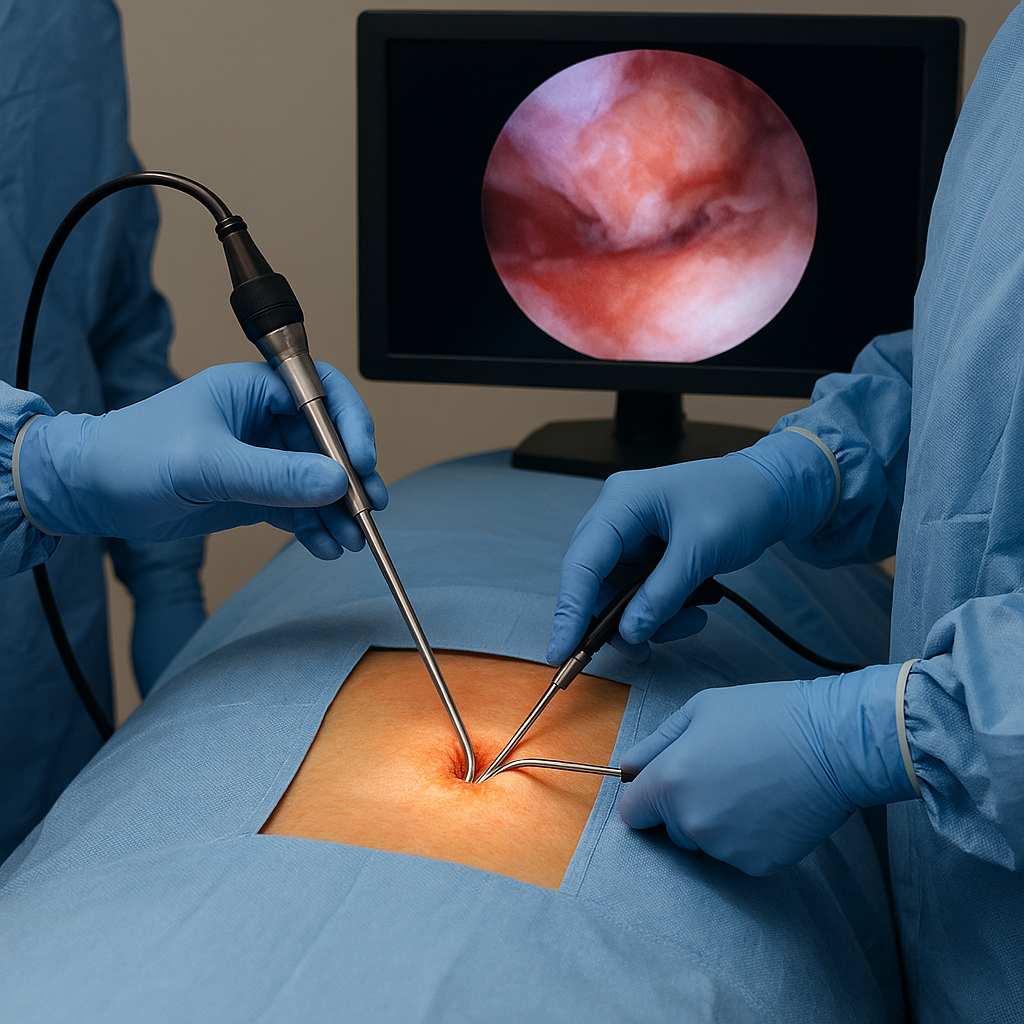
Endoscopic Spine Surgery – Ultra-Minimally Invasive Technique
Endoscopic spine surgery uses tiny incisions and high-definition cameras to precisely remove the tissue compressing nerves. This advanced minimally invasive spine surgery technique results in less pain, smaller scars, faster healing, and lower infection risk compared to traditional open spine surgery. It is especially effective for patients with moderate spinal stenosis who want quicker recovery and less downtime.
Pros:
Reduced postoperative pain and blood loss
Shorter hospital stays or outpatient procedure
Faster recovery and return to daily activities
Cons:
Requires specialized surgical training and equipment
May not be suitable for severe or complex spinal stenosis cases
The TOPS Facet Joint Replacement System: Preserving Spine Motion
Another breakthrough answering what is the newest treatment for spinal stenosis? is the Total Posterior Spine (TOPS) device.
The Total Posterior Spine (TOPS) system replaces damaged facet joints at the lumbar levels, particularly L4-L5, while preserving natural spinal motion. Unlike traditional spinal fusion surgery, which limits movement and can cause adjacent segment disease, the TOPS device maintains flexibility and stability, contributing to improved functional outcomes and reduced pain.
Pros:
Preserves spinal mobility
Reduces risk of further degeneration at adjacent levels
Provides effective pain relief
Cons:
New technology with less long-term data
Potential surgical risks including infection and implant issues
Interspinous Spacers (e.g., Vertiflex Superion Implant)
Interspinous spacers are small implants placed between vertebrae to keep the spinal segment open and relieve nerve compression. This minimally invasive implant procedure preserves spinal motion and usually allows same-day discharge.
Pros:
Minimally invasive outpatient procedure
Immediate symptom relief for moderate lumbar spinal stenosis
Preserves natural spine biomechanics
Cons:
Not suitable for severe stenosis or spinal instability
Possible implant migration or failure
Regenerative Medicine: Stem Cell and PRP Therapy
Regenerative therapies use injections of stem cells or PRP to promote tissue healing, reduce inflammation, and potentially reverse some degenerative changes causing spinal stenosis. While still experimental, these treatments offer a non-surgical alternative to manage symptoms and enhance spinal health.
Pros:
Minimally invasive
Potential long-term tissue repair and pain relief
Cons:
Limited clinical evidence and insurance coverage
Variable efficacy between patients
Radiofrequency Ablation (RFA)
RFA uses targeted radio waves to heat and deactivate nerves sending pain signals from compressed spinal nerves. Often performed outpatient, this procedure provides significant pain relief lasting months.
Pros:
Effective for nerve pain management
Minimally invasive and quick recovery
Cons:
Does not alleviate nerve compression itself
Some patients may not have lasting relief
Percutaneous Image-Guided Lumbar Decompression (PILD)
PILD is a minimally invasive technique that removes thickened ligamentum flavum tissue compressing the spinal canal through small incisions with real-time image guidance.
Pros:
Less invasive than traditional decompression surgery
Short recovery time with symptom improvement
Cons:
Suitable only for select patients with ligament-related stenosis
Not effective for bony compression or instability
Traditional and Complementary Treatments Still Vital
While many ask what is the newest treatment for spinal stenosis?, tried-and-true methods remain crucial:
Physical therapy for spinal stenosis: Customized exercise regimens relieve nerve pressure and improve spinal strength and flexibility.
Medications: NSAIDs, pain relievers, and nerve-specific drugs control symptoms.
Corticosteroid injections: These targeted therapies promote inflammation reduction and pain relief.
Massage therapy: Used as a complementary approach, it reduces muscle tension and supports recovery.
When Is Surgery for Spinal Stenosis Recommended?
If conservative and newer minimally invasive treatments don’t provide relief, spinal stenosis surgery may be necessary. This includes:
Laminectomy: Removing parts of bone or tissue pressing on nerves.
Spinal fusion: Stabilizing unstable segments, though it restricts motion.
Advanced devices like lumbar interspinous distraction implants or the TOPS system provide newer, less motion-restrictive alternatives.
How to Choose the Best Treatment For Spinal Stenosis?
Answering what is the newest treatment for spinal stenosis? involves personalized evaluation. The ideal choice depends on your:
Specific symptoms and severity
Location of stenosis (lumbar, cervical)
Overall health and preferences
Desired recovery timeline and function goals
Consulting expert spine specialists facilitates access to both traditional and state-of-the-art options like minimally invasive spine surgery for spinal stenosis and regenerative therapies.
Why Choose King’s Spine Centre?
At King’s Spine Centre in Dubai, we specialize in advanced spinal treatments, offering cutting-edge, minimally invasive solutions for spinal stenosis.
Our team of professionals delivers personalized care and long-term relief to help you regain mobility and live pain-free.
Take Action Today
If you’re wondering what is the newest treatment for spinal stenosis?, remember that spinal care is rapidly advancing. Modern procedures and therapies offer safe, effective solutions beyond traditional surgery.
Contact King’s Spine Centre now for an expert consultation and learn which treatment is best for overcoming your spinal stenosis.
Take the first step towards relief today!
Medical Disclaimer
This blog is for informational purposes only and is not a substitute for professional medical advice, diagnosis, or treatment. Always consult your physician or a qualified healthcare provider regarding any medical questions or concerns.
Review Note
This content has been medically reviewed by the spine care team at King’s Spine Centre, Dubai, to ensure accuracy and relevance. Our team follows evidence-based guidelines and uses advanced diagnostic tools such as MRI and CT scans to evaluate spinal conditions.
