


How to cure neck pain fast?
Waking up with a stiff neck or struggling to turn your head after a long day at your desk? You’re not alone.
Neck pain has become increasingly common, leaving many people wondering, “Why does my neck hurt?” From poor posture to “tech neck” caused by constant screen use, these causes are often part of everyday life.
If you’re searching for how to cure neck pain fast, the good news is that most cases improve quickly with simple steps.
At King’s Spine Centre, this is something specialists see every day: many neck pain episodes resolve with the right guidance, targeted exercises, and small lifestyle changes, often without the need for scans or surgery.
Why does my neck hurt? Common causes explained
Understanding the reason behind your discomfort is the first step toward finding how to cure neck pain fast and preventing it from coming back.
Here are the most common causes:
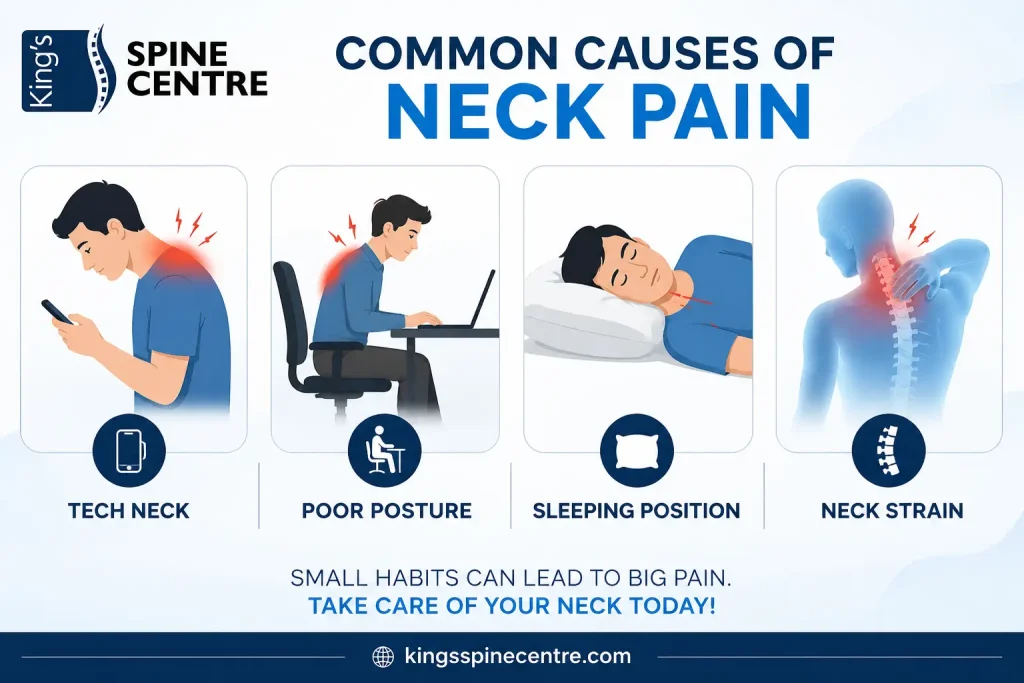
- Poor posture (Tech neck): Long hours on phones or laptops strain neck muscles, leading to stiffness.
- Muscle strain: Prolonged sitting, driving, or repetitive movements can overwork the neck.
- Sleeping position: An unsupportive pillow or awkward posture may leave your neck stiff.
- Sudden movements: A sudden twist can trigger a sharp, painful spasm.
- Age-related changes: Wear and tear in the spine can lead to persistent discomfort or stiffness.
If your pain includes a sharp spasm, the same heat/cold and gentle movement approach below works — just move more cautiously for the first day.
How to cure neck pain fast at home?
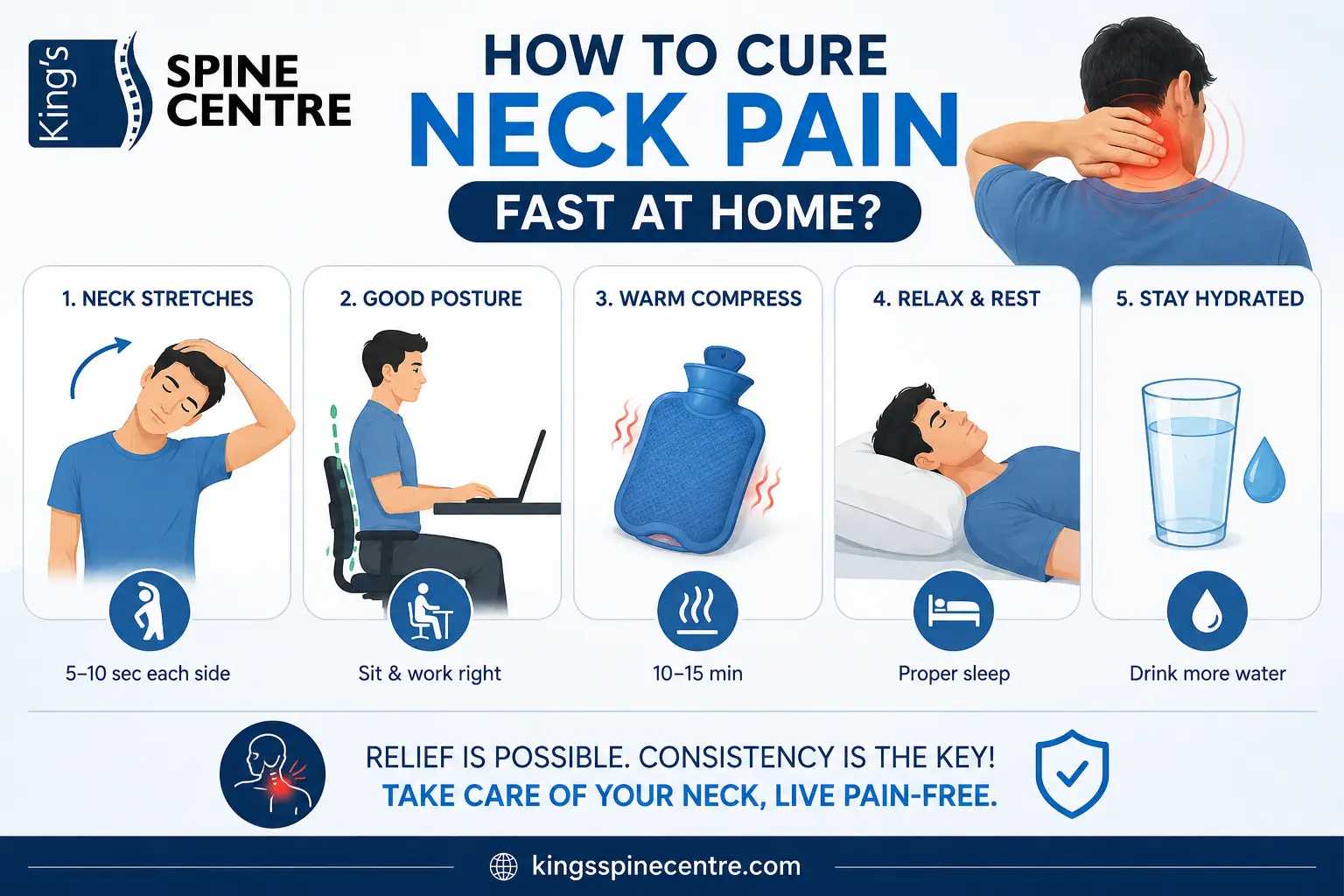
- Use heat or cold: A warm compress or heat pad can relax tense neck muscles in 15-20 minutes. For a new injury, a cold pack helps reduce swelling. You can switch between them for stubborn pain.
- OTC pain relief: Anti-inflammatory medications (such as ibuprofen, if suitable for you) can reduce both pain and swelling in the short term. Always follow the guidance on the packaging.
- Keep moving gently: Complete rest can make stiffness worse. Gentle, controlled movement keeps the joints mobile and prevents stiffness from deepening.
- Check your sleeping position: Use a pillow that keeps your head level with your spine, not pushed forward or to the side. This can make a big difference overnight.
- Adjust your screen height: Your monitor should sit at eye level. If you’re working on a laptop, prop it up and use a separate keyboard. Even 20 minutes of forward head posture can significantly tighten the deep cervical muscles.
- Take micro breaks: If your pain is caused by postural fatigue, the best medicine is a change of scenery. Every 20 minutes, look away from your screen and focus on something 20 feet away.
While these tips work for most people, persistent or recurring pain should not be ignored. If symptoms continue or worsen, it’s best to consult spine specialists at King’s Spine Centre for an accurate diagnosis and personalized care.
Stretches for Neck Pain (Do These Today)
Movement is often the most effective medicine for neck and shoulder pain caused by posture, stress, or long hours at a desk. These neck pain relief stretches are designed to decompress the spine and reset your posture, whether you’re sitting at a desk, commuting, or relaxing at home.
- Chin tucks: Gently draw your chin straight back, creating a “double chin.” Hold 5 seconds. Repeat 10 times. This helps realign your neck and improves posture.
- Side flexion stretch: Gently tilt your ear toward your shoulder and hold for 20-30 seconds. Repeat both sides. Relieves upper back tension that often contributes to neck pain.
- Neck rotation: turn your head to each side as far as comfortable. Hold 3 seconds. 8-10 reps per side. Do not force range.
- Shoulder blade squeezes: Sit tall, pull your shoulder blades back and down as if holding a pencil between them. Hold 5 seconds, 10 reps. Counteracts the rounded-shoulder posture that loads the neck.
Important: These stretches are general suggestions. Everyone’s spine is unique. What works for a simple muscle strain might not be appropriate for a disc issue or a pinched nerve.
If you notice tingling, numbness, or a burning sensation running down your arm along with the neck pain, this can indicate a pinched nerve rather than simple muscle strain stretching alone may not resolve it, and it’s worth having it assessed.

Understanding the crunch: What is Crepitus?
That audible popping, clicking, or grinding is clinically known as crepitus. While it may sound dramatic, it is often a normal mechanical issue and not a sign of serious damage.
It often happens due to tiny gas bubbles in the joints or from tendons and ligaments moving over bones.
Is it dangerous? If the sound is painless, it is usually harmless. However, if the “crunch” is accompanied by pain, swelling, or a “catching” sensation, it’s a sign that the joint surfaces may need a professional evaluation.
How to get rid of crunching sound in neck?
- Improve posture and avoid prolonged forward head position.
- Stay active with gentle neck mobility exercises.
- Reduce stiffness with heat therapy.
The Crick: Why does your neck suddenly lock?
A “crick” is essentially your body’s way of sounding an alarm. It usually occurs when a small joint in the neck (a facet joint) becomes irritated or “stuck,” causing the surrounding muscles to go into a protective spasm to prevent further movement.
It can happen after sleeping on a poor pillow, sitting in a draught, or even just turning your head quickly.
How to get rid of crick in neck?
- Apply a heat pad to the painful side for 15 minutes before attempting to move.
- Slowly and gently take the neck through its natural range; don’t force it.
- A gentle self-massage of the muscles at the base of the skull and along the top of the shoulder can release protective muscle spasm.
- Keep moving normally, stiffening up on the sofa prolongs recovery.
If the crick persists beyond 3-4 days, or if it keeps coming back, it’s worth having a specialist assess the underlying joint mobility.
When neck pain needs expert care?
Most neck pain is mechanical and self-limiting. But some symptoms warrant prompt specialist review. At King’s Spine Centre, we take a thorough, structured approach to ruling out anything that needs more than conservative care.
See a specialist if your neck pain is accompanied by any of the following:
- Tingling, numbness, or weakness in the arms or hands
- Pain that radiates from the neck into the shoulder, arm, or fingers
- Neck pain following a fall, road traffic accident, or impact
- Pain that’s worse at rest or wakes you from sleep
- Persistent pain that hasn’t improved after 4-6 weeks of self-management
- Dizziness, visual disturbance, or difficulty with balance, alongside neck pain
These can point to nerve involvement or a deeper spine issue, where a clear diagnosis matters.
At King’s Spine Centre, the focus is on understanding the cause first,so treatment is targeted, effective, and helps prevent ongoing problems.
Why choose King’s Spine Centre for neck pain treatment?
When neck pain doesn’t settle, the right specialist can make a real difference. King’s Spine Centre focuses on finding the cause, not just easing symptoms.
Patients benefit from spine-focused care, with experienced clinicians using advanced diagnostics to pinpoint the source, whether it’s muscle strain, a disc issue, or nerve involvement.
Where possible, treatment begins with non-surgical and minimally invasive options, including targeted physical therapy and guided rehabilitation. Every plan is tailored to your lifestyle and condition.
Neck pain that won’t go away?
Let the specialists get to the root of it and help you move without pain.

Frequently Asked Questions
How to relieve neck pain?
Apply gentle heat to relax spasming muscles, take frequent “micro-breaks” from screens to reduce postural fatigue, and perform light stretches like chin tucks. If the pain is sharp and new, an ice pack for 15 minutes can help calm inflammation.
How to relieve neck pain quickly during work?
Keep your screen at eye level, sit upright, take frequent breaks, and perform simple neck stretches to reduce stiffness and muscle strain.
Why does my neck hurt even after resting?
Too much rest can sometimes make things worse. When muscles and joints stay inactive, they can stiffen. Ongoing pain may indicate an underlying issue that requires proper assessment.
Can neck pain go away on its own?
Yes, most mild neck pain resolves naturally within a few days with simple care, movement, and better posture.
When is neck pain considered a medical emergency?
You should seek expert care immediately if your neck pain is accompanied by sudden weakness in your arms, difficulty gripping objects, persistent numbness, or if the pain started following a high-impact injury like a fall or car accident.
Medical Disclaimer
This content is for informational purposes only and is not a substitute for professional medical advice, diagnosis, or treatment. Always consult your physician or a qualified healthcare provider regarding any medical questions, symptoms, or conditions.
Medically Reviewed
Reviewed by the spine care team at King’s Spine Centre, Dubai — a multidisciplinary team of spine specialists, neurosurgeons, pain management physicians and physiotherapists following evidence-based, JCI-accredited care standards.
